
Selling a Home in Auburn: Inspections Aren’t Pass or Fail

Selling a home in Auburn can feel stressful when inspection day arrives. But a standard buyer’s home inspection is not a pass-or-fail test.
Its purpose is to report on the property’s condition within the inspection’s scope. Findings do not automatically mean the buyer will cancel or the seller must correct every item.
The next steps depend on the actual concerns, the purchase agreement and any applicable requirements.
When the report arrives, start with what it says—not how many pages it contains.
Table of Contents
- What a home inspection tells you
- Why report length can be misleading
- How to evaluate the findings
- What buyers may request
- Repairs versus credits
- A practical seller example
- Preparing for inspection day
- Quick Q&A
- Selling in Auburn or Opelika

Selling a Home in Auburn: Expect a Condition Report
An inspector evaluates accessible systems and components according to the inspection agreement and applicable standards.
The resulting report may include observations, photographs, maintenance recommendations, limitations and items needing further evaluation.
Even a well-maintained home can have findings.
That does not make the inspection meaningless. It means the report needs to be read carefully and understood in context.
A seller’s confidence in the home and a buyer’s need to investigate can both be reasonable. The useful response is to address specific information.

A Long Report Does Not Tell the Whole Story
The number of pages is not a reliable measure of the seriousness of the findings.
Photographs, descriptions, explanations and repeated references can make a report lengthy. A shorter report can still contain an important concern.
Instead of asking whether the report looks overwhelming, ask:
- What did the inspector observe?
- What remains uncertain?
- Is further evaluation recommended?
- Does the issue affect an important system?
- What is the buyer actually requesting?
- What deadlines apply?
Those questions move the discussion toward decisions.

Look at the Findings Individually
Not every observation calls for the same response.
A maintenance recommendation differs from an active leak. A worn finish differs from a concern requiring a qualified specialist.
Avoid minimizing an item before understanding it. Also avoid assuming the worst before obtaining clarification.
| Report information | Useful next step |
|---|---|
| Routine maintenance | Understand the recommendation and whether it is part of the buyer’s request |
| Visible defect | Clarify the issue and possible corrective work |
| Further evaluation recommended | Consult an appropriately qualified professional |
| Area not inspected | Understand the limitation and whether additional access is needed |
| Estimated component age | Separate age from documented condition and performance |
| Buyer’s repair request | Review the exact wording, timing and contract provisions |
Your REALTOR® can help organize the transaction discussion. Technical conclusions and repair recommendations belong with appropriately qualified professionals.
What Can the Buyer Request?
Depending on the agreement and circumstances, a buyer may request repairs, a credit, another adjustment or no changes.
A request is not automatically an agreement.
Likewise, the inspection report itself does not independently decide who must pay for every item or whether the transaction continues.
The National Association of REALTORS® guide to home inspections (https://www.nar.realtor/the-facts/consumer-guide-home-inspections) explains how inspections fit into the buying process.
Review your own contract’s inspection provisions and deadlines. If the meaning or legal effect of a provision is uncertain, seek advice from the closing attorney or another appropriate legal professional.
Repairs or a Credit?
Sometimes a proposed solution involves completing work before closing. In other situations, the parties may discuss a credit.
Compare the practical details.
If Repairs Are Proposed
Clarify the work, who will perform it, the completion date and what documentation will be provided.
Avoid vague promises that leave different expectations.
If a Credit Is Proposed
Coordinate with the lender and closing professionals before assuming a credit can be structured as requested.
A credit does not repair the underlying condition, and some issues may need attention before closing.
The Consumer Financial Protection Bureau’s inspection guidance (https://www.consumerfinance.gov/owning-a-home/close/schedule-a-home-inspection/) discusses repair negotiations and possible lender requirements.
A Practical Seller Example
Consider a hypothetical Auburn seller who receives a lengthy inspection report.
At first, the page count feels alarming. On review, the report contains photographs, maintenance notes, limitations and several specific concerns.
The buyer’s actual request focuses on only a few items.
The next step is to understand those concerns, obtain appropriate information and review the requested response under the agreement.
That process does not guarantee a particular outcome. It gives the seller a clearer basis for deciding what to do.
Prepare Without Trying to Predict Every Finding
Before the appointment, discuss access arrangements with your REALTOR®.
Make it possible to reach the areas and equipment included in the inspection. Coordinate pets and provide available maintenance records.
If a known issue needs evaluation, discuss it early rather than attempting a cosmetic cover-up.
Preparation can improve access and communication. It does not guarantee a report without findings.
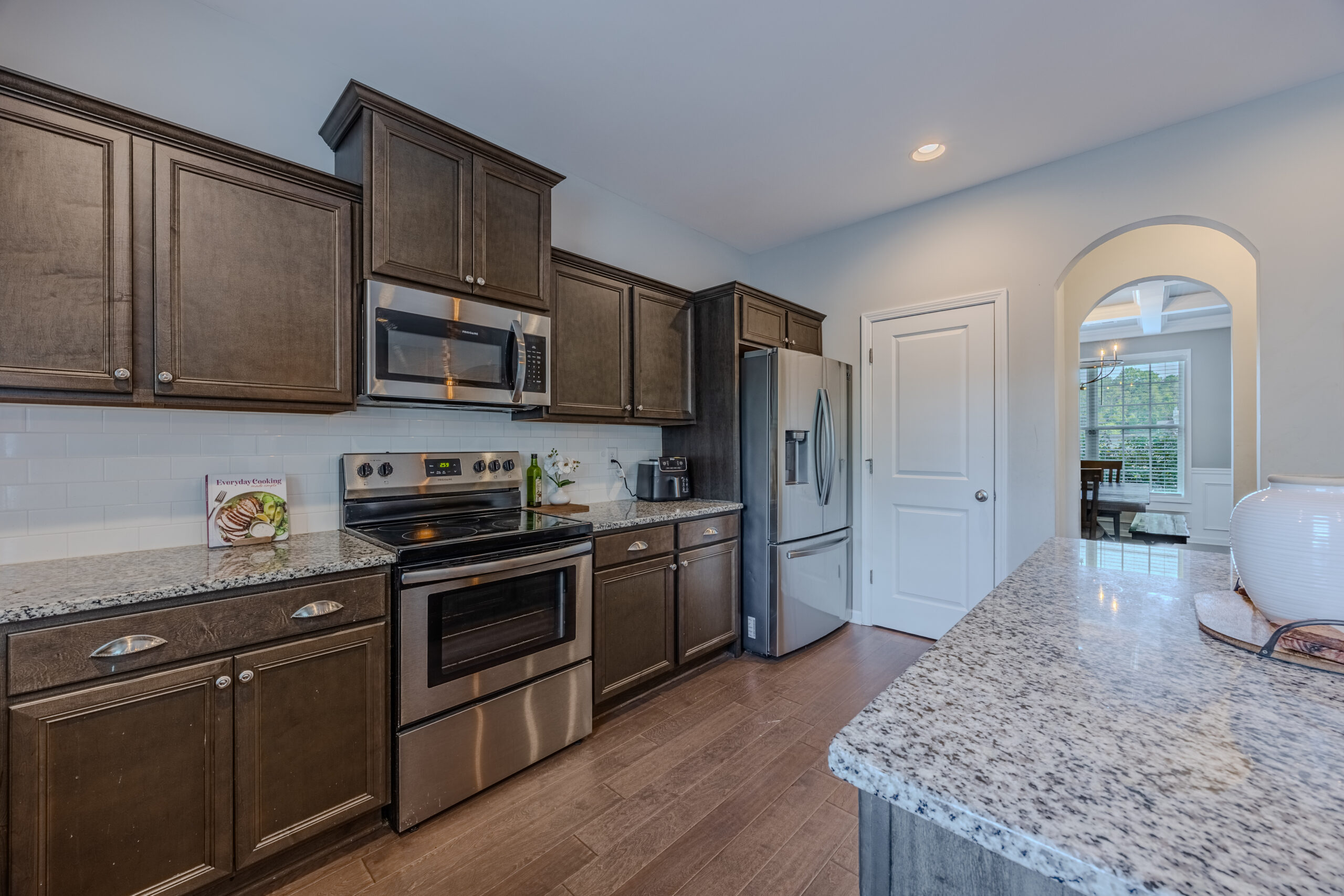
Auburn and Opelika Properties Need Individual Attention
A campus-area condominium, an established Auburn house and a newer Opelika home may involve different components and responsibilities.
For condominiums, clarify which items belong to the owner and which may involve an association. Review the relevant documents and obtain appropriate guidance.
Location does not change the need to understand condition.
A home near Auburn University (https://www.auburn.edu/) or Jordan-Hare Stadium (https://auburntigers.com/jordan-hare-stadium) still deserves careful evaluation.
Buyers comparing daily convenience may also consider routes to Opelika Tiger Town (https://www.opelika-al.gov/397/Tiger-Town). Those researching schools should confirm current information with Auburn City Schools (https://www.auburnschools.org/).
Explore Auburn subdivisions (https://auburnopelikaalrealestate.com/auburn-al-subdivisons/) for location research, then evaluate each property on its own facts.
Five Steps When the Report Arrives
- Read the findings and limitations carefully.
- Identify the buyer’s actual requests.
- Obtain technical clarification or estimates where needed.
- Review deadlines and proposed terms.
- Document any agreement through the appropriate process.
Your first emotional reaction does not have to become your negotiating response.
Quick Q&A
Can a home fail a standard buyer’s inspection?
The inspection generally reports condition rather than issuing a pass-or-fail grade. Separate lender, code or other requirements may still affect the transaction.
Does a long report mean the sale is falling apart?
No. Evaluate the content, seriousness and buyer’s response rather than page count.
Must the seller repair everything?
Do not assume so. Responsibilities and options depend on the agreement and applicable requirements.
Can the buyer request nothing?
Yes. A buyer may decide to proceed without requesting changes, depending on the circumstances.
Can the seller offer a credit?
Possibly. Any proposed arrangement needs agreement and coordination with the lender and closing professionals where applicable.
Should sellers ignore maintenance items?
No. Understand them, but distinguish them from other concerns and the buyer’s actual requests.
Can Laura help sellers through this stage?
Yes. I can help organize the transaction steps, review requests and coordinate communication while qualified professionals address technical questions.
Related Auburn–Opelika Topics
- Preparing your home for sale
- Pricing for today’s market
- Choosing a realistic closing timeline
- New construction inspections
- Evaluating offers beyond the price
Prepare for Your Auburn or Opelika Sale
Laura Sellers is an Auburn University alumna who has lived in the Auburn–Opelika area since 1988 and has been a REALTOR® for over 20 years. She is an Associate Broker with Berkshire Hathaway HomeServices Preferred Real Estate — the Official Real Estate Partner of the Auburn Tigers.

Thinking about selling? Tell me your property address and timing so we can discuss preparation, pricing and the steps ahead.
Market conditions can change. Your plan should reflect current information and your individual property.
Call or text Laura Sellers at 334-332-7263.
Visit AuburnOpelikaALRealEstate.com.
Read the findings. Understand the requests. Then decide on the next step.
Homes, y’all!