
Move to Auburn: New Construction or Older Home?

Move to Auburn and you will quickly face an important choice: Should you buy a brand-new house or an older home filled with character?
New construction may offer modern finishes, energy-efficient features, and fewer immediate repairs. An older Auburn home may provide distinctive architecture, mature landscaping, an established setting, or a location closer to places you visit regularly.
Neither option is automatically better. The right choice depends on your budget, moving schedule, preferred location, tolerance for repairs, and willingness to make changes after closing.
Table of Contents
- New Construction vs. Older Homes
- Reasons Buyers Choose New Construction
- Reasons Buyers Choose Older Homes
- Comparing Costs and Maintenance
- Location and Auburn Lifestyle
- Questions to Ask Before Buying
- A Realistic Buyer Scenario
- Quick Q&A
- Related Auburn Real Estate Topics
- About Laura Sellers
Move to Auburn: New Construction or Character?
A brand-new home can feel exciting. Everything looks fresh, the finishes are current, and no previous owner has used the appliances or lived in the rooms.
However, older homes may offer details that are difficult to reproduce. Hardwood floors, mature trees, larger lots, traditional architecture, and established surroundings can give a property personality.
The decision is not simply “new versus old.” Buyers should compare each property’s construction quality, location, condition, price, floor plan, and anticipated expenses.
A poorly built new home is not automatically better than a well-maintained older one. Likewise, charm should not distract you from expensive deferred maintenance.
Reasons Buyers Choose New Construction
New construction may appeal to buyers who want updated designs and fewer immediate projects.
Potential advantages include:
- New roofing and major systems
- Modern electrical and plumbing components
- Current kitchen and bathroom finishes
- Open floor plans
- Larger closets and storage areas
- Builder warranties
- Energy-efficient windows and appliances
- New neighborhood amenities
- Opportunities to select certain finishes
- Less immediate cosmetic work
For buyers relocating from another state, a newer home may offer a simpler transition. Coordinating extensive repairs from a distance can be difficult, especially when you are also changing jobs, selling another property, or learning a new community.
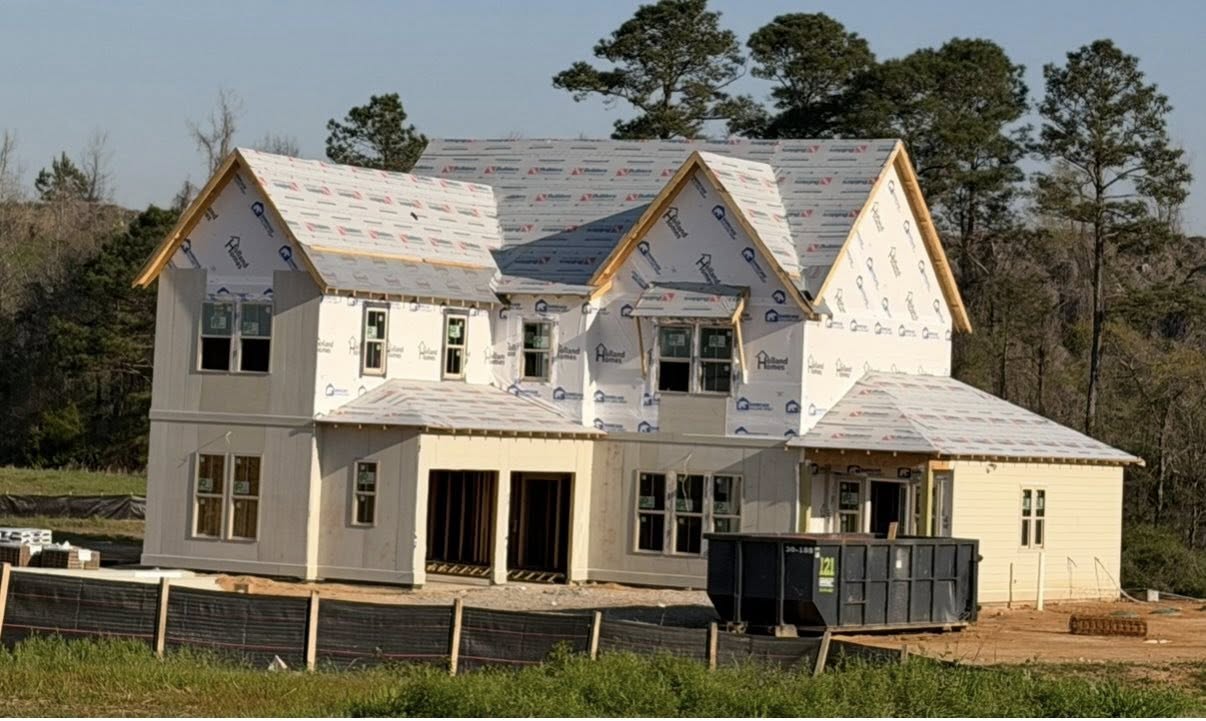
Questions to Ask About New Construction
Do not assume “new” means problem-free.
Ask:
- What warranties are provided?
- Which items are included in the advertised price?
- Are appliances, blinds, fencing, or landscaping included?
- How much are the HOA dues and initiation fees?
- Are additional phases planned?
- Who maintains the roads and common areas?
- Can you conduct an independent inspection?
- How are warranty requests submitted?
- What upgrades increased the final price?
- Are nearby lots expected to remain vacant?
Construction activity may also continue after you move in. Consider noise, construction traffic, dust, unfinished amenities, and the possibility that future homes may affect your view.
Reasons Buyers Choose an Older Auburn Home
Older homes can offer character and locations that newer development cannot duplicate.
Depending on the property, potential advantages may include:
- Mature landscaping and established trees
- Distinctive architectural details
- Larger or differently shaped lots
- Established neighborhood surroundings
- Locations closer to campus or Downtown Auburn
- Less nearby construction activity
- Renovations completed by previous owners
- Floor plans that feel more traditional
- Original hardwood floors or built-ins
- An opportunity to update the home gradually
Auburn has changed tremendously since I arrived in 1988. As the city has grown, new development has expanded outward while many older properties remain closer to established roads, shopping, campus, and familiar Auburn landmarks.
That location may be worth accepting an older kitchen or smaller closet.

Questions to Ask About an Older Home
Look beyond fresh paint and attractive furnishings.
Investigate:
- Roof age
- Heating and cooling systems
- Plumbing materials
- Electrical components
- Windows and insulation
- Foundation and drainage
- Crawlspace or basement condition
- Previous additions or renovations
- Permits when applicable
- Signs of moisture or wood damage
- Sewer or septic information
- Insurance availability and cost
A qualified home inspector can help identify visible concerns, but additional evaluations may be appropriate. Buyers should consult qualified contractors, engineers, electricians, plumbers, or other specialists when needed.
New Construction vs. Older Home
| Consideration | New Construction | Older Home |
|---|---|---|
| Initial appearance | Fresh and modern | May be updated or dated |
| Immediate maintenance | Often lower, but not guaranteed | May require earlier repairs |
| Architectural character | Usually reflects current trends | May offer distinctive details |
| Landscaping | Often young or limited | May include mature trees |
| Location | Frequently in expanding areas | May be closer to established destinations |
| Customization | Possible before completion | Possible through renovation |
| Neighborhood activity | Construction may continue | Usually more established |
| Inspection | Still strongly recommended | Especially important |
| Storage | Often designed for current preferences | May have smaller closets |
| Unexpected expenses | Still possible | May be more likely |
Compare the Complete Cost
The sales price is only part of the financial picture.
With new construction, buyers may need to budget for:
- Window coverings
- Fencing
- Additional landscaping
- Refrigerator or other appliances
- Ceiling fans
- Garage storage
- Upgraded lighting
- HOA initiation fees
- Moving after a construction delay
With an older home, possible expenses may include:
- Roof replacement
- Heating and cooling updates
- Electrical or plumbing work
- New windows
- Flooring
- Kitchen or bathroom renovations
- Drainage corrections
- Exterior maintenance
- Increased utility expenses
Obtain professional estimates instead of guessing. A lower asking price does not always produce a lower total cost.
Location and the Auburn Lifestyle
Your home’s location will affect daily life long after the excitement of new finishes fades.
Some buyers want convenient access to Auburn University (https://www.auburn.edu/), Downtown Auburn, or work. Others prefer more space, newer amenities, or less activity farther from the city’s center.
Buyers can explore Auburn subdivisions (https://auburnopelikaalrealestate.com/auburn-al-subdivisons/) while comparing newer communities, established neighborhoods, property types, HOA requirements, and locations.
Consider proximity to:
- Employment
- Auburn University
- Shopping and dining
- Parks and recreation
- Major roads
- Medical care
- Downtown Auburn
- Auburn Mall (https://www.shopauburnalabama.com/)
- Regular appointments and activities
Traffic may also change during Auburn University events and football weekends near Jordan-Hare Stadium (https://auburntigers.com/jordan-hare-stadium).
Buyers researching public schools should verify current attendance zones and enrollment details directly through Auburn City Schools (https://www.auburnschools.org/). Boundaries and policies can change, so always check the exact property address.
A Realistic Buyer Scenario
Imagine a relocation buyer comparing two similarly priced Auburn homes.
One is brand-new with modern finishes, a large pantry, spacious closets, and a builder warranty. However, it is farther from the buyer’s workplace, and construction will continue throughout the neighborhood.
The other home is older and closer to work. It has mature trees and a larger lot, but the kitchen needs updating and the heating and cooling system is approaching the end of its expected life.
The buyer should not choose based solely on the most attractive kitchen. The complete comparison should include commuting time, renovation estimates, system ages, insurance, monthly expenses, neighborhood plans, and how long the buyer expects to own the home.
Newness offers convenience. Character and location may offer a different kind of value.
Questions to Ask Yourself
Before choosing, ask:
- Do I want projects after moving?
- How much money will remain after closing?
- Would I rather customize or have everything finished?
- How important are mature trees and landscaping?
- Is location more important than new finishes?
- Can I tolerate nearby construction?
- Do I prefer an open or traditional floor plan?
- How much maintenance can I comfortably manage?
- Will the home’s storage meet my needs?
- Which property fits my normal routine?
Your honest answers may make the decision much easier.
Quick Q&A
Is new construction always more expensive?
Not necessarily. Prices depend on location, square footage, lot, finishes, incentives, and market conditions. Remember to include upgrades and items not included in the base price.
Should I inspect a brand-new home?
Yes. New homes can still have incomplete work, installation problems, or construction defects. Consider an independent inspection and understand the builder’s warranty process.
Are older homes harder to insure?
Some may require additional information or updates, depending on the roof, electrical system, plumbing, condition, and insurer requirements. Contact an insurance professional before making assumptions.
Can I negotiate on new construction?
Possibly. The builder may consider price, upgrades, closing-cost assistance, or other terms, but availability varies. Your REALTOR® can help you evaluate the complete offer.
Does an older home always require renovations?
No. Some older homes have been carefully maintained or completely updated. Others may need cosmetic improvements or significant repairs.
Which option has better resale potential?
No property can be guaranteed to appreciate or resell quickly. Location, condition, price, maintenance, floor plan, buyer demand, and future market conditions all matter.
Should I use a REALTOR® when buying new construction?
Yes. The sales representative works for the builder. Your own REALTOR® can help you evaluate the property, contract, incentives, deadlines, inspections, and comparison with resale homes.
Related Auburn Real Estate Topics
Continue researching your move to Auburn:
- Auburn University Relocation Guide (https://auburnopelikaalrealestate.com/auburn-university-relocation-guide/)
- Relocation to Auburn and Opelika (https://auburnopelikaalrealestate.com/relocation/)
- Auburn Subdivisions (https://auburnopelikaalrealestate.com/auburn-al-subdivisons/)
- Auburn Condos (https://auburnopelikaalrealestate.com/auburn-al-condos/)
- Client Reviews (https://auburnopelikaalrealestate.com/contact/about-laura-sellers-auburn-realtor/real-estate-client-reviews-auburn-opelika/)
- AuburnOpelikaALRealEstate.com
Let’s Find the Right Auburn Home for You
Laura Sellers is an Auburn University alumna who has lived in the Auburn–Opelika area since 1988 and has been a REALTOR® for over 20 years. She is an Associate Broker with Berkshire Hathaway HomeServices Preferred Real Estate, the Official Real Estate Partner of the Auburn Tigers.

Whether you want the convenience of a brand-new home or the character of an established property, I can help you compare the complete picture. We will look at location, condition, construction, expenses, and how each home fits your everyday life.
If you are planning to move to Auburn, call or text Laura Sellers at 334-332-7263 or visit AuburnOpelikaALRealEstate.com.
Brand-new house or one with character? Let’s find the home that feels right to you.
Homes, y’all!