
Moving to Auburn Alabama: What Samford Hall Represents

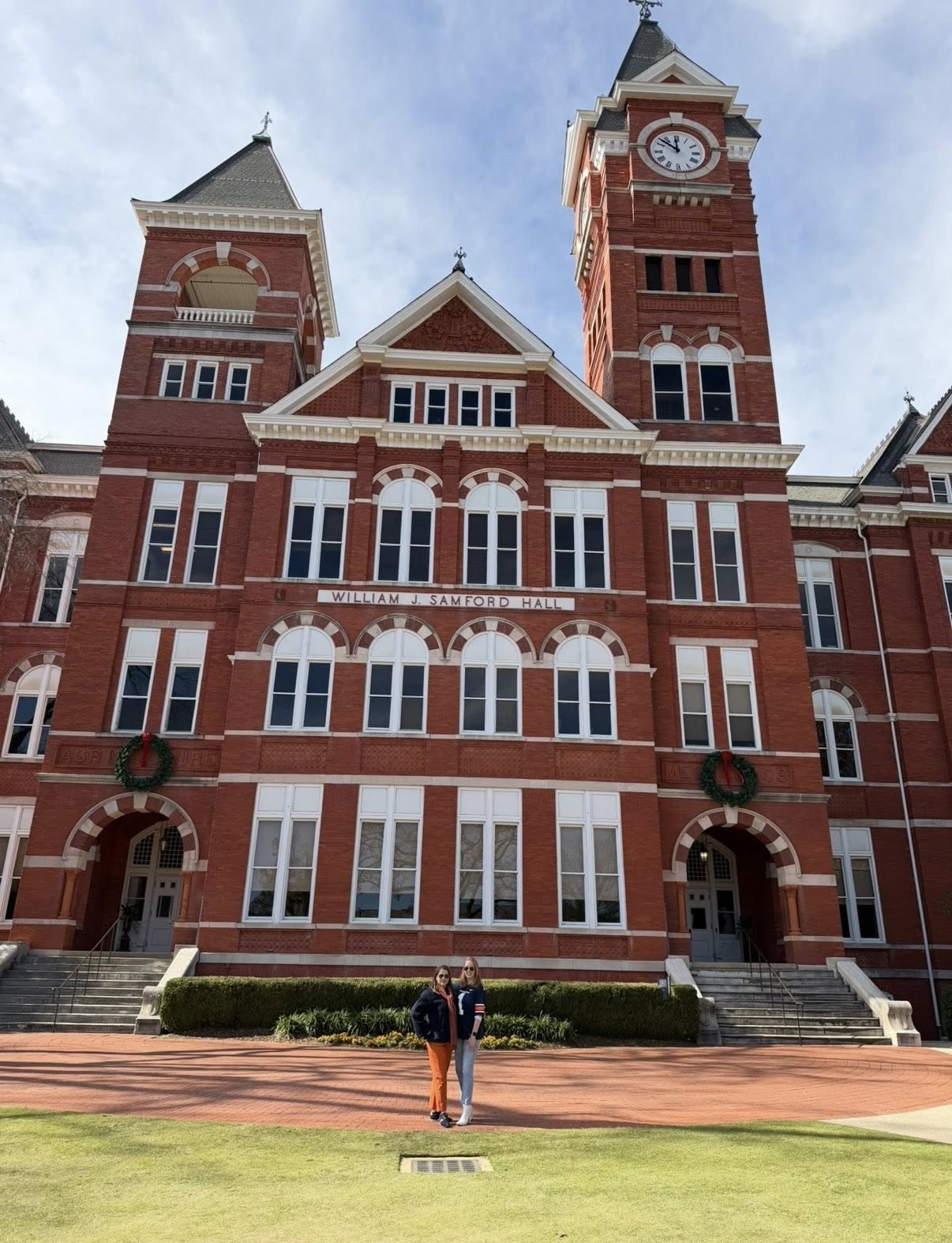
Moving to Auburn Alabama means getting to know the places that give the city its identity. Samford Hall is one of those places. Its clock tower and red-brick exterior make a beautiful photograph, but its meaning goes beyond its appearance.
For someone visiting Auburn, it may be a memorable stop on a campus tour. For someone who lives here, it can become a familiar part of a walk, a drive through town, or a return to campus.
That’s one of the differences between visiting Auburn and making a home here. The landmarks you once made a special trip to see can become part of your everyday surroundings.
The Local Takeaway
Samford Hall connects Auburn’s history with the university’s daily life. If being close to campus matters to you, think about how you would actually use that location: walking, working, attending events, or spending time downtown.
Table of Contents
- What is Samford Hall?
- What the building represents
- From a campus landmark to a familiar sight
- What living near campus means for home buyers
- A real-world relocation example
- Quick questions and answers
- Related topics
- Planning your move to Auburn
What Is Samford Hall?
Samford Hall is a historic Auburn University building at 182 South College Street. According to Auburn University’s official building profile, it was built in 1888–1890 after the earlier Old Main building burned in 1887.
It still serves as the university’s administrative headquarters. It isn’t simply a former office building preserved as a landmark.
Knowing that makes it a little more interesting when you pass by. You’re looking at a building with a long history that continues to have a working role at Auburn University.
What the Building Represents
To me, Samford Hall represents continuity: generations of people arriving in Auburn, making memories, and carrying a connection to this place with them.
The local tourism organization describes it as one of Auburn’s most photographed landmarks. Its history includes use for classrooms, faculty offices, and the college library before its present administrative role. You can read more in Auburn-Opelika Tourism’s history of Samford Hall.
But you don’t have to memorize dates to appreciate it.
For an incoming student, it might represent a new beginning. For a graduate returning to town, it might bring back memories. For someone relocating for work, it may be one of the first places that makes Auburn feel recognizable.
As an Auburn University alumna, I understand how a familiar campus building can mean much more than its architecture.
From a Campus Landmark to a Familiar Sight
When you visit somewhere, you tend to notice the highlights.
When you live there, you start noticing the ordinary moments around them.
Maybe you see Samford Hall during a morning walk. Maybe you pass it while meeting someone downtown. Maybe it becomes the place you point out when friends or family visit.
Living near campus can make those experiences easier to include in your routine, depending on your home’s location and the routes you use.
That doesn’t mean everyone needs to buy within walking distance. Some buyers want campus nearby. Others prefer more separation between home and university activity.
The important question is: how much do you want campus to be part of your daily life?
What Living Near Campus Means for Home Buyers
A landmark can help you picture the lifestyle you want. Choosing a home still requires looking closely at the practical details.
When buyers tell me they want to live “near Auburn University,” I ask what that means to them.
Do they want to walk to a particular building? Drive to campus for work? Visit downtown restaurants? Come into town for football weekends?
Those answers help us compare locations more usefully.

| What matters to you | What to check when comparing homes |
|---|---|
| Walking to campus | The actual route, crossings, distance, and your comfort walking it |
| Working at Auburn University | Travel to your specific workplace and your parking arrangements |
| Spending time downtown | How you would get there and how often you expect to go |
| Visiting for university events | Access, parking, and the experience during busy periods |
| Having more separation from campus | Your preferred setting and the drive you are comfortable making |
A home can be close to one part of campus without being equally convenient to another. Start with the places you’ll actually use.
My Auburn University relocation guide is a useful place to begin thinking through those priorities.
A Real-World Relocation Example
Here’s a hypothetical example of how this can work.
A buyer visits Auburn, walks past Samford Hall, enjoys lunch downtown, and decides they want a home close to campus.
Before narrowing the search, we talk about their routine. They’ll be working at the university, but they also want space for a home office and a particular type of outdoor area.
We compare a condo closer to campus with a house farther away. The condo may offer the location they initially pictured. The house may better match their space needs.
Neither option wins simply because it is closer to Samford Hall.
The right choice depends on how the buyer balances location, budget, home features, and everyday convenience. The campus visit helps identify what they love about Auburn. The home search turns that feeling into a practical decision.

Quick Questions and Answers
What is Samford Hall used for today?
Auburn University identifies Samford Hall as its administrative headquarters. It remains a working university building.
Why is Samford Hall associated so strongly with Auburn?
Its distinctive clock tower, long history, and frequent appearance in campus photography make it a recognizable symbol of the university.
Do I need to live near campus to enjoy Auburn traditions?
No. Living closer may make some visits more convenient, but you can enjoy campus and university events from many locations. Consider how you prefer to travel.
Does “near Auburn University” mean a home is walkable to campus?
Not necessarily. Check the route to your actual destination, including sidewalks, crossings, distance, and your own preferences.
Should campus proximity be my main home-buying priority?
It can be an important priority, but compare it with your budget, space needs, work routine, and the property’s overall suitability.
Related Topics
- Explore Auburn condo communities
- Compare Auburn subdivisions
- Learn about buying a home in Auburn or Opelika
- Plan your Auburn relocation
Let’s Talk About Your Move to Auburn
Samford Hall is one part of what makes Auburn feel like Auburn. Finding your home here means deciding which parts of that experience you want close by.
I help buyers compare Auburn and Opelika homes based on their priorities, whether they’re relocating for work, returning to the area, or moving across town.
Call or text me at 334-332-7263, or contact me to discuss your move.
Laura Sellers is an Auburn University alumna, Auburn resident since 1988, and REALTOR® and Associate Broker licensed since 2005. She serves residential buyers and sellers in Auburn and Opelika, including Auburn University faculty and staff relocating to the area.

Berkshire Hathaway HomeServices Preferred Real Estate is the Official Real Estate Partner of the Auburn Tigers.
Homes, y’all!