
Living in Auburn Alabama: How You Know You’re a Local
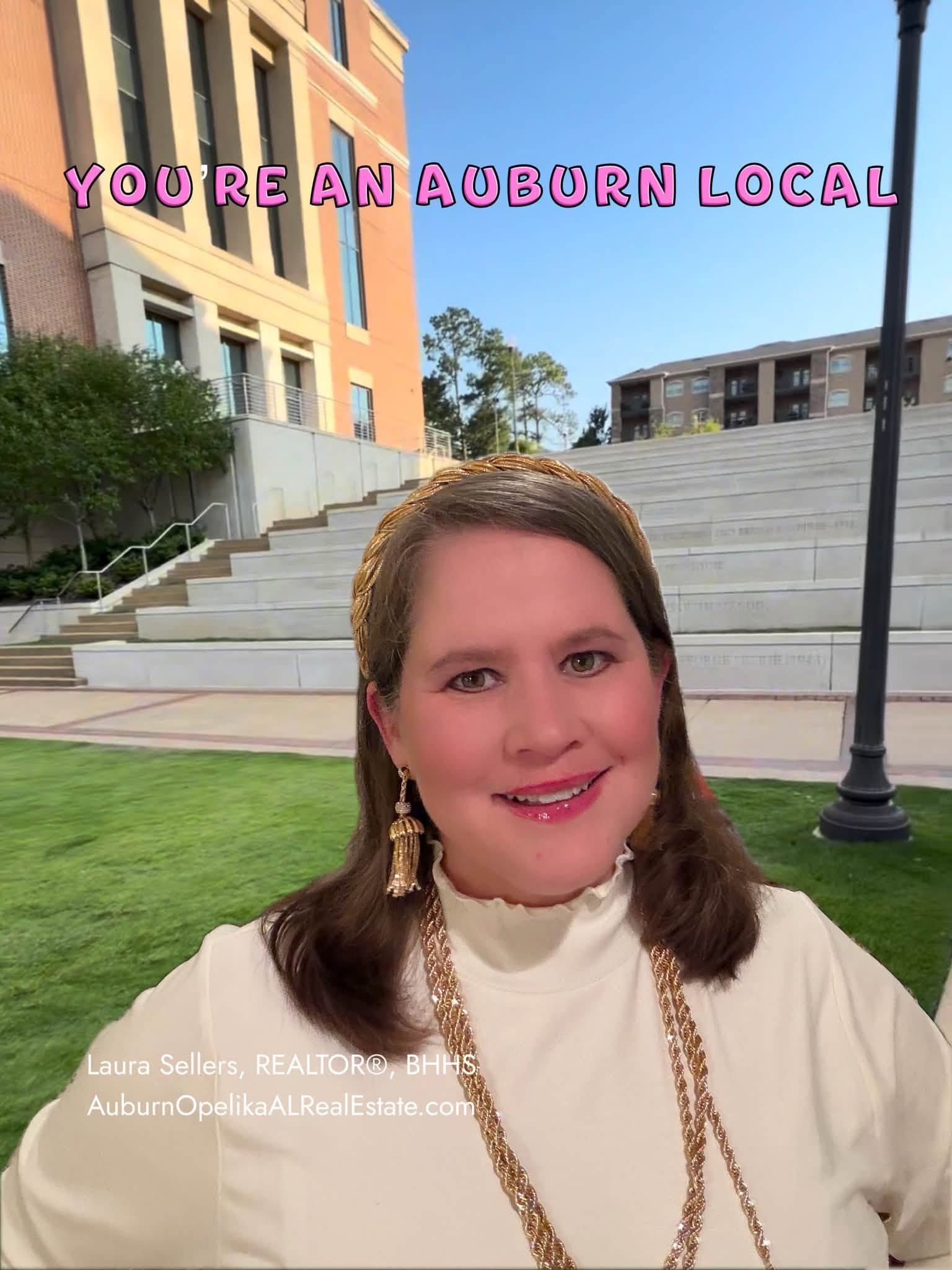
Living in Auburn Alabama long enough changes the way you see the city—and the way you give directions. You remember buildings that disappeared years ago, know what occupied a corner before the newest development arrived, and instinctively recognize the brief stretches when the students have left town.
I have lived in the Auburn–Opelika area since 1988. Believe me, Auburn has changed.
The small college town many people remember has grown into a busy university community with new neighborhoods, restaurants, businesses, roads, apartments, and developments. Yet some things remain unmistakably Auburn—including automatically answering “War Eagle” when a complete stranger says it first.
Table of Contents
- How You Know You Have Lived in Auburn Long Enough
- Giving Directions Using Missing Buildings
- Remembering Auburn Before the New Development
- Knowing When the Students Leave
- Answering “War Eagle” Automatically
- How Auburn Has Changed Since 1988
- What Auburn’s Growth Means for Homebuyers
- Quick Q&A
- Work With an Experienced Auburn REALTOR®
How You Know You’ve Lived in Auburn Long Enough
There is no official test for becoming an Auburn local. However, long-time residents tend to recognize a few signs.
You have probably lived here long enough when:
- You give directions using buildings that are no longer there.
- You remember what occupied a property before the newest development arrived.
- You know approximately when Auburn University students leave town.
- You enjoy those glorious days when traffic feels lighter.
- You hear “War Eagle” and respond without even thinking.
- Someone calls Auburn a small college town, and your first thought is, “You should have seen it when I got here.”
Auburn still maintains many of its traditions, but the city surrounding those traditions has changed considerably.

You Give Directions Using Buildings That Aren’t There Anymore
Long-time Auburn residents sometimes provide directions that make perfect sense—to other long-time residents.
“Turn where that old restaurant used to be.”
“It’s across from the place that was there before the new building.”
“Go past the old shopping center. No, not the current one—the one that used to be there.”
New residents may have no idea what any of that means. However, people who have watched Auburn change can often picture every former building, business, and landmark along the route.
It is almost like Auburn has two maps: the current one and the one long-time residents still carry in their heads.
Living in Auburn Alabama Means Remembering What Used to Be There
Construction and development have become familiar parts of Auburn life.
A property can remain unchanged for years and then suddenly become a new apartment community, neighborhood, restaurant, commercial building, or mixed-use development. Before long, newer residents may never know what occupied that land previously.
Long-time residents tend to remember:
- Former restaurants and stores
- Old apartment complexes
- Undeveloped stretches of land
- Roads before they were widened or extended
- Neighborhoods before surrounding development arrived
- Familiar shortcuts that no longer feel particularly short
That historical perspective can also be valuable in real estate. Understanding how different parts of Auburn have developed helps buyers place a neighborhood or property in a broader local context.
You Know When the Students Leave Town
Auburn University (https://www.auburn.edu/) is central to the city’s identity, calendar, and daily rhythm.
Long-time residents generally know when the academic year begins, when graduation approaches, and when student activity will temporarily decrease. They may not have every university date memorized, but they can often feel the difference around town.
When many students leave for a break, residents may notice:
- Lighter traffic on certain roads
- Shorter restaurant waits
- Easier parking
- Less activity around campus
- Quieter residential areas near the university
Then move-in begins, classes resume, and Auburn comes roaring back to life.
The quieter periods may be brief, but local residents know how to appreciate them while they last.
You Answer “War Eagle” Automatically
You do not have to follow every football statistic to understand what “War Eagle” means in Auburn.
It works as a greeting, farewell, celebration, and immediate connection between strangers. Someone can say “War Eagle” in another city—or even another state—and an Auburn person will probably answer automatically.
That connection becomes especially visible during football season. Jordan-Hare Stadium (https://auburntigers.com/jordan-hare-stadium), Tiger Walk, tailgating, and Downtown Auburn all become part of the game-day experience.
Football weekends also affect traffic, parking, shopping, dining, and travel throughout the city. Buyers considering a home near Auburn University should understand how major events may affect their particular location.
“You Should Have Seen Auburn When I Got Here”
When someone describes Auburn as a tiny college town, long-time residents may smile.
Auburn still has a college-town identity, but it is not the Auburn of 1988. The city has expanded geographically and economically. Housing options now include established neighborhoods, newer subdivisions, townhomes, condominiums, student-oriented properties, luxury homes, and game-day residences.
Shopping and services have also expanded across Auburn and Opelika. Auburn Mall (https://www.shopauburnalabama.com/) has served the area for decades, while newer commercial corridors have added even more options.
Growth brings additional conveniences and housing choices. It can also mean more traffic, construction, and competition for well-located properties.
The important point for buyers is simple: Auburn is not one uniform market. Different areas offer very different settings and lifestyles.
What Auburn’s Growth Means for Homebuyers
Someone relocating to Auburn may look at a map and assume that two homes a few miles apart offer essentially the same experience. In reality, location can affect commute patterns, campus access, game-day activity, shopping convenience, and the type of neighborhood setting surrounding the property.
Buyers should compare:
| Consideration | Questions to Ask |
|---|---|
| Auburn University access | How often will you travel to campus? |
| Traffic | What will your normal commute look like? |
| Game days | How does football traffic affect the location? |
| Property type | Do you prefer an established home, newer construction, townhome, or condo? |
| Yard and maintenance | How much upkeep do you want? |
| Surrounding development | What is already nearby, and what should you independently research? |
| Intended use | Will this be a primary residence, second home, or game-day property? |
Buyers researching public school information should consult Auburn City Schools (https://www.auburnschools.org/) directly for current attendance zones, enrollment requirements, and policies.
You can also explore Auburn subdivisions (https://auburnopelikaalrealestate.com/auburn-al-subdivisons/) when comparing neighborhood locations, housing styles, and available Auburn homes for sale.
Local Knowledge Helps Buyers See the Bigger Picture
Imagine a relocating buyer comparing two attractive Auburn homes.
One is closer to Auburn University but may experience more event traffic. The other requires a longer drive to campus but offers a different neighborhood setting and additional yard space.
Neither house is automatically better. The right choice depends on the buyer’s schedule, priorities, budget, and intended use.
That is where genuine local knowledge becomes useful. A local REALTOR® can help buyers identify the practical questions they may not know to ask yet.
Quick Q&A
What is living in Auburn Alabama like?
Auburn combines a strong university presence with established neighborhoods, growing residential areas, local events, parks, restaurants, and convenient access to Opelika. Daily life can vary considerably depending on your proximity to campus.
Has Auburn changed significantly over the years?
Yes. Auburn has experienced substantial residential and commercial growth. Long-time residents have watched undeveloped land, older buildings, and familiar roads transform over time.
Does Auburn become quieter when students leave?
Certain parts of the city may experience lighter traffic and reduced activity during university breaks. However, Auburn remains an active and growing community throughout the year.
How does Auburn football affect residents?
Home games can affect traffic, parking, restaurants, shopping, and travel near campus. The impact depends heavily on the property’s location and the route a resident normally travels.
Should I live near Auburn University?
That depends on your priorities. Some buyers value convenient campus access and walkability. Others prefer more distance from university and game-day activity.
Is Auburn still a small town?
Auburn retains many college-town traditions, but its population, housing, businesses, and physical footprint have grown considerably.
Can a local REALTOR® help me compare Auburn neighborhoods?
Yes. An experienced Auburn REALTOR® can help you compare locations, property styles, commutes, neighborhood settings, and practical considerations based on your goals.
Your Auburn–Opelika Real Estate Resource
Laura Sellers is an Auburn University alumna who has lived in the Auburn–Opelika area since 1988 and has been a REALTOR® for over 20 years. She is an Associate Broker with Berkshire Hathaway HomeServices Preferred Real Estate, the Official Real Estate Partner of the Auburn Tigers.

That local history provides more than a list of old buildings and former businesses. It offers perspective on how Auburn has grown, how its different areas connect, and what buyers should consider before choosing a home.
Related Auburn–Opelika Topics
- Moving to Auburn, Alabama
- Auburn homes for sale
- Living near Auburn University
- Auburn subdivisions and neighborhood styles
- Auburn game-day homes
- Comparing Auburn and Opelika
- Relocating to the Auburn–Opelika area
Ready to Make Auburn Home?
If you are considering living in Auburn Alabama, it helps to work with someone who remembers what Auburn was, understands what it has become, and can help you explore where it may fit into your future.
Call or text Laura Sellers at 334-332-7263 or visit AuburnOpelikaALRealEstate.com to begin your Auburn home search.
Auburn has changed since 1988—but helping people find their place here never gets old.
Homes, y’all!