

Auburn University traditions are filled with history, but the complete story of the Toomer’s Oaks includes loss, replacement, another devastating setback, and years of careful work before the current trees could finally be rolled.
Most Auburn fans know what happens at Toomer’s Corner after a major victory.
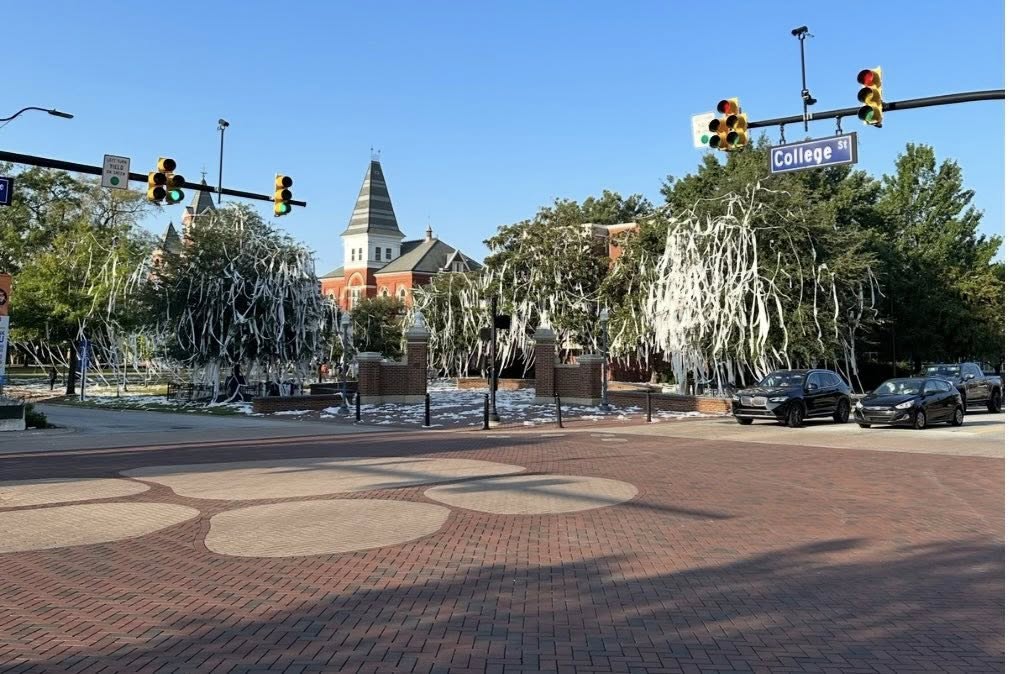
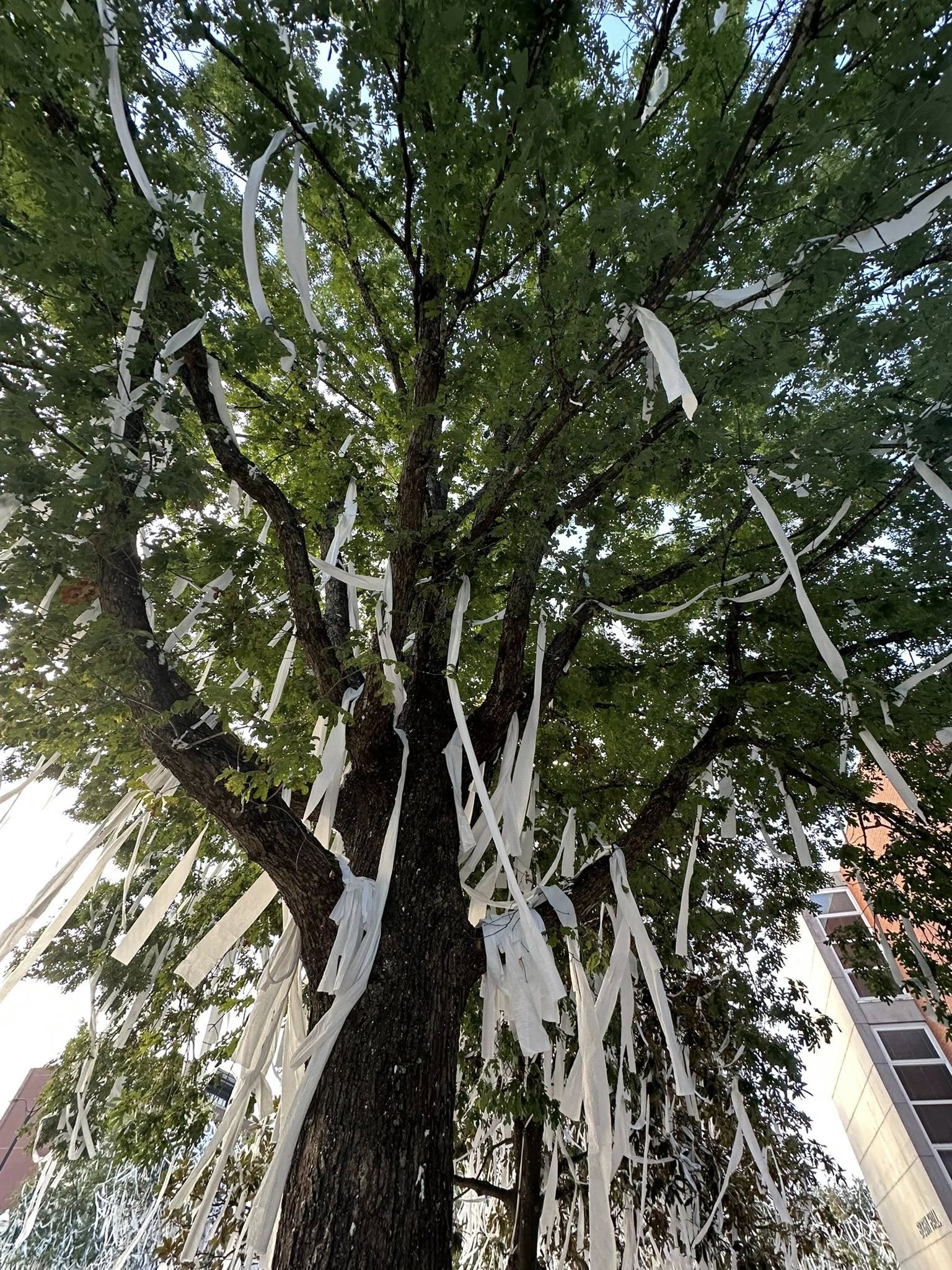
People gather at the intersection of College Street and Magnolia Avenue, throw rolls of toilet paper into the trees, and celebrate together.
What many people do not know is how much Auburn University has done to protect and restore that tradition.
The current Toomer’s Oaks are not the original trees—and they are not even the first replacements.
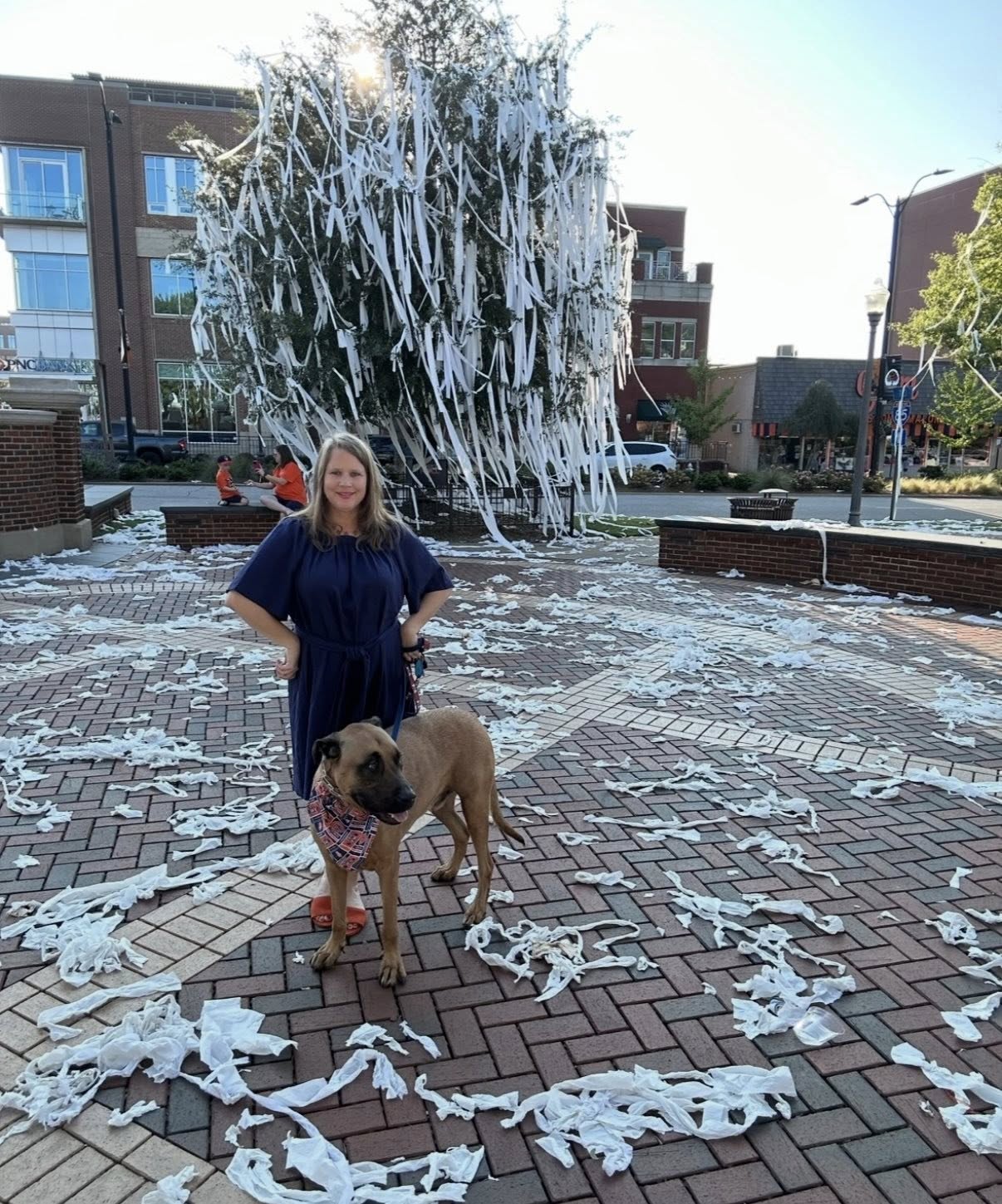
Table of Contents
- When were the original Toomer’s Oaks planted?
- How did rolling Toomer’s Corner begin?
- What happened to the original trees?
- The first replacement oaks
- The fire that caused another setback
- The current Toomer’s Oaks
- When did rolling the trees return?
- Why Auburn protects this tradition
- Frequently asked questions
- Moving to Auburn, Alabama
When Were the Original Toomer’s Oaks Planted?
The original Auburn Oaks at Toomer’s Corner were planted between 1937 and 1939.
For decades, the large live oaks stood at one of Auburn’s most recognizable intersections, where the Auburn University campus meets Downtown Auburn.
Over time, the trees became closely connected with Auburn celebrations.
Generations of Auburn students, alumni, fans, and residents gathered under the oaks after football victories and other major achievements.
The trees were more than landscaping. They became living symbols of the Auburn community.
How Did Rolling Toomer’s Corner Begin?
Like many Auburn University traditions, the exact beginning of rolling Toomer’s Corner is debated.
One popular account traces the celebration to Toomer’s Drugs, which reportedly once had the city’s only telegraph.
When news of an Auburn victory arrived during an away game, employees supposedly threw ticker tape from the telegraph onto nearby power lines.
The later tradition of using toilet paper may have developed during the early 1970s.
Auburn Athletics Director Emeritus David Housel connected its rise to Auburn’s famous 1972 “Punt, Bama, Punt” victory over Alabama.
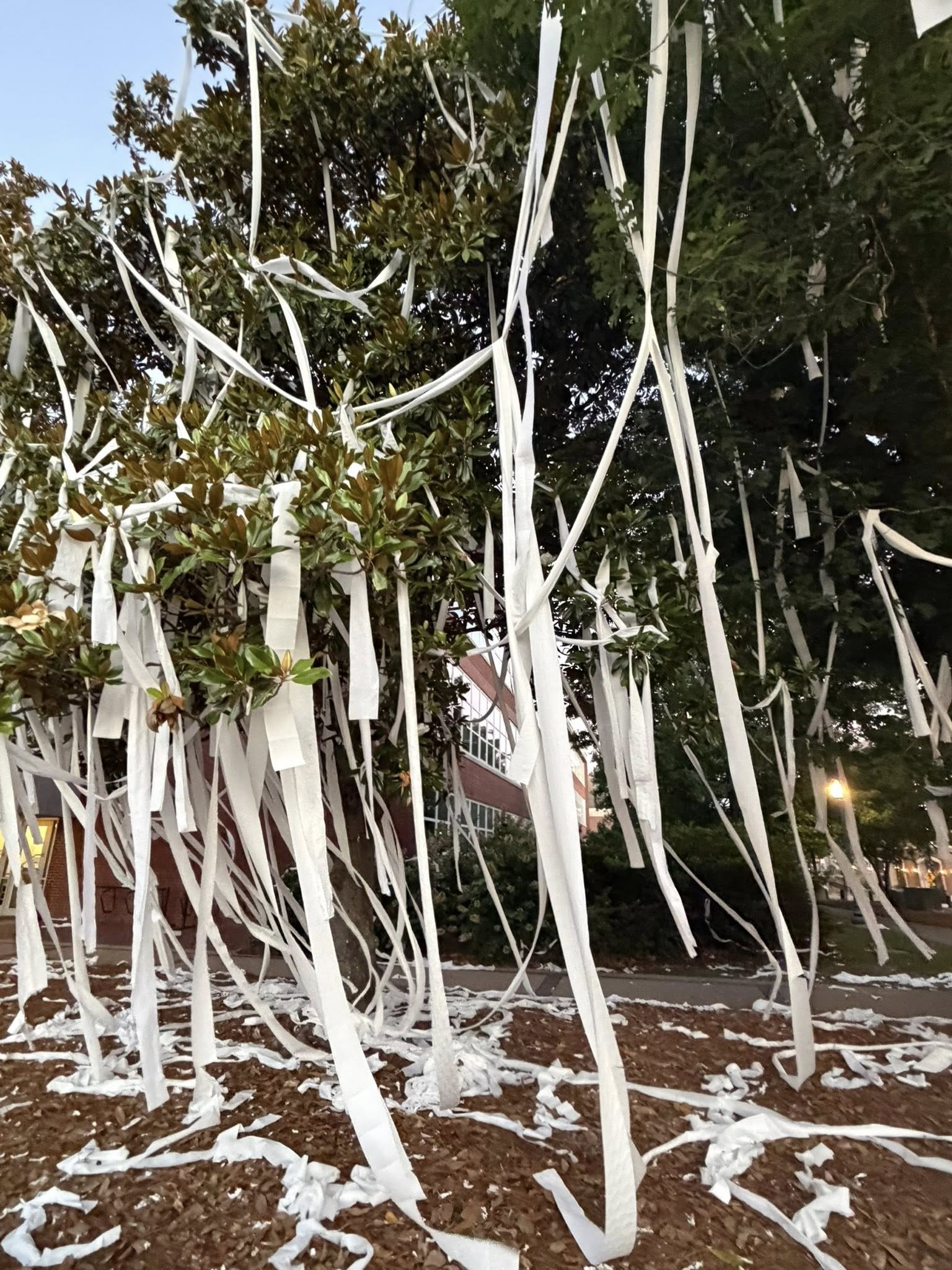
Regardless of exactly when the toilet paper appeared, rolling Toomer’s Corner became one of the most recognizable Auburn University traditions.
Rolling Toomer’s Corner (https://auburntigers.com/traditions-rolling-toomers-corner)
What Happened to the Original Toomer’s Oaks?
After the 2010 Iron Bowl, the original trees were deliberately poisoned with a powerful herbicide.
Auburn University specialists worked to save them, but the damage was too severe.
The university monitored the trees, treated the surrounding area, and studied the effects of the poisoning. Despite those efforts, the oaks did not survive.
They were removed in April 2013.
The loss was painful because the trees had witnessed decades of Auburn history. They had been part of celebrations, photographs, family memories, and the everyday appearance of Toomer’s Corner.
However, the removal of the trees did not end the tradition.
The Auburn Family continued celebrating at the corner while plans were developed for its future.
The First Replacement Toomer’s Oaks
On February 14, 2015, Auburn planted two new live oaks at Toomer’s Corner.
Despite cold weather, members of the Auburn Family gathered to watch the large trees lowered into place.
The two oaks came from a South Carolina nursery. Each was approximately 35 feet tall with a spread of about 30 feet.
The university also renovated the surrounding area and planted additional trees grown from acorns collected from the original Auburn Oaks.
The new trees needed time to recover from transplanting and establish healthy root systems. Auburn therefore asked fans to wait before rolling them.
The plan was for rolling to resume in the fall of 2016.
Another Devastating Setback
After rolling was permitted again in 2016, one of the new trees was intentionally set on fire.
The fire severely damaged the tree and created another setback for the restoration of Toomer’s Corner.
Both of the 2015 replacement oaks were eventually removed.
That means the trees standing at Toomer’s Corner today are not the original oaks and are not the first pair of replacement oaks.
This is the part of the story many people do not know.
When Were the Current Toomer’s Oaks Planted?
The two current Toomer’s Oaks were planted in February 2017.
Once again, Auburn University faced the challenge of helping mature trees adapt to a new environment.
Fans were asked not to roll the two prominent oaks while their root systems recovered and expanded.
People could continue the tradition by rolling designated trees nearby, but the two new corner oaks remained protected.
The wait lasted several years.

How Did Auburn Care for the New Oaks?
Auburn University’s care involved much more than planting the trees and hoping they survived.
University professionals monitored the oaks through:
- Regular health inspections
- Soil-moisture monitoring
- Soil sampling
- Nutrient evaluation
- Root-system measurements
- Growth assessments
- Transplant-stress monitoring
- Maintenance of the surrounding soil
- Protection from excessive compaction
The trees faced the normal challenges of transplanting along with the future stress created by rolling and cleanup.
Auburn’s goal was not simply to reopen the tradition as quickly as possible. The goal was to give the trees the best opportunity for long-term health.
When Did Rolling the Current Toomer’s Oaks Return?
In 2023, Auburn University announced that fans could once again roll the two prominent oaks at Toomer’s Corner.
The university determined that the trees had recovered from transplant stress and had become established enough to withstand rolling and cleanup.
That decision came approximately six years after the current trees were planted.
Auburn Oaks Ready to Roll (https://fm.auburn.edu/auburn-university-announces-fans-can-roll-two-auburn-oaks-at-toomers-corner-this-fall/)
The return did not mean the trees no longer required protection.
Auburn explained that maintenance would remain intensive because rolling celebrations and crowds can compact the soil and place additional stress on the oaks.
Why Did Auburn Wait So Long?
A mature tree can look established above ground while its root system is still adapting below the surface.
Auburn’s arborists needed time to determine whether the trees were recovering, growing, and establishing sufficient roots.
Allowing thousands of people to gather around the trees too quickly could have damaged the surrounding soil and complicated their recovery.
Waiting was difficult because rolling the oaks is emotionally important to the Auburn Family.
However, protecting the trees required patience.
What Does Auburn Roll at Toomer’s Corner?
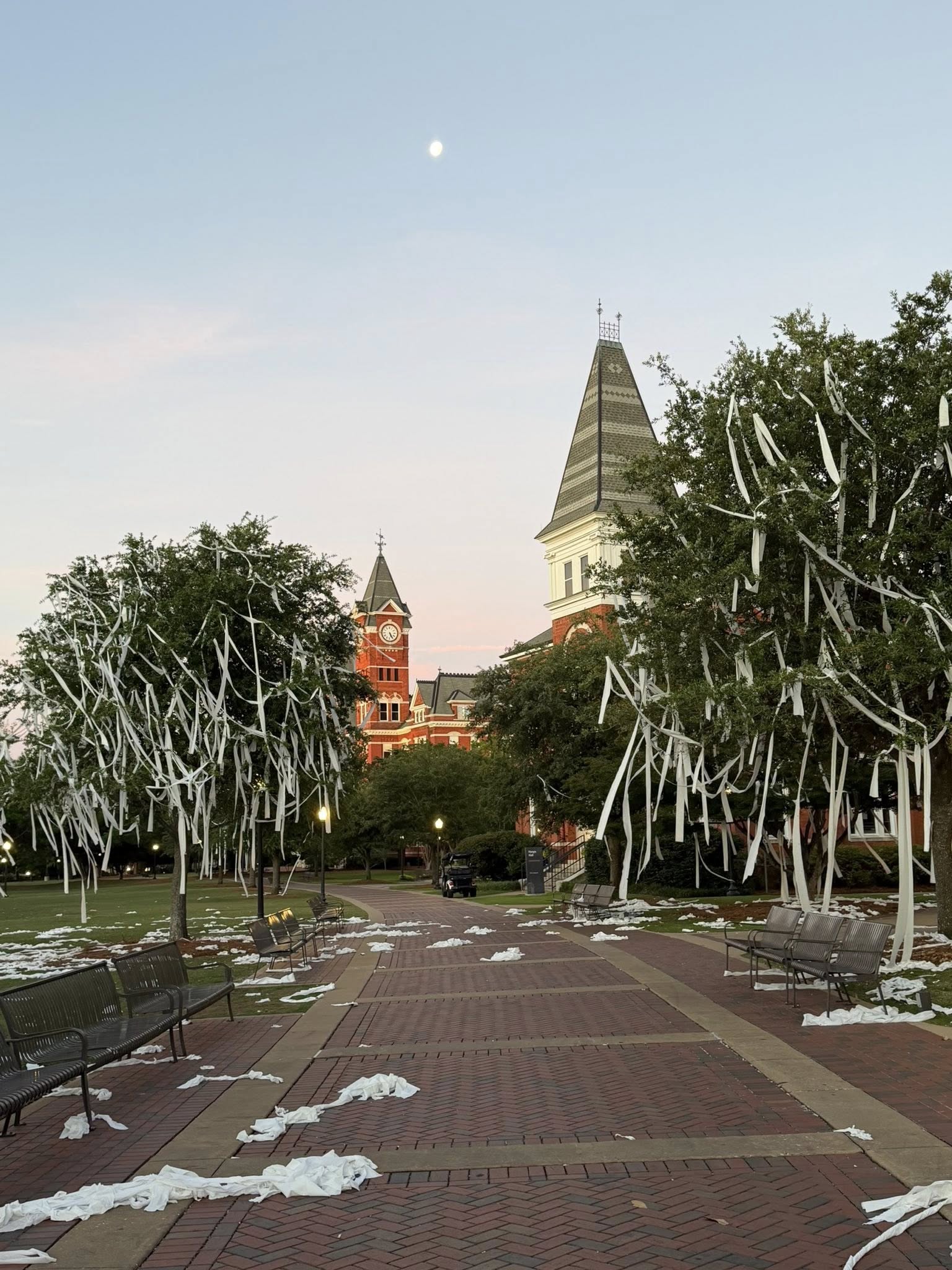
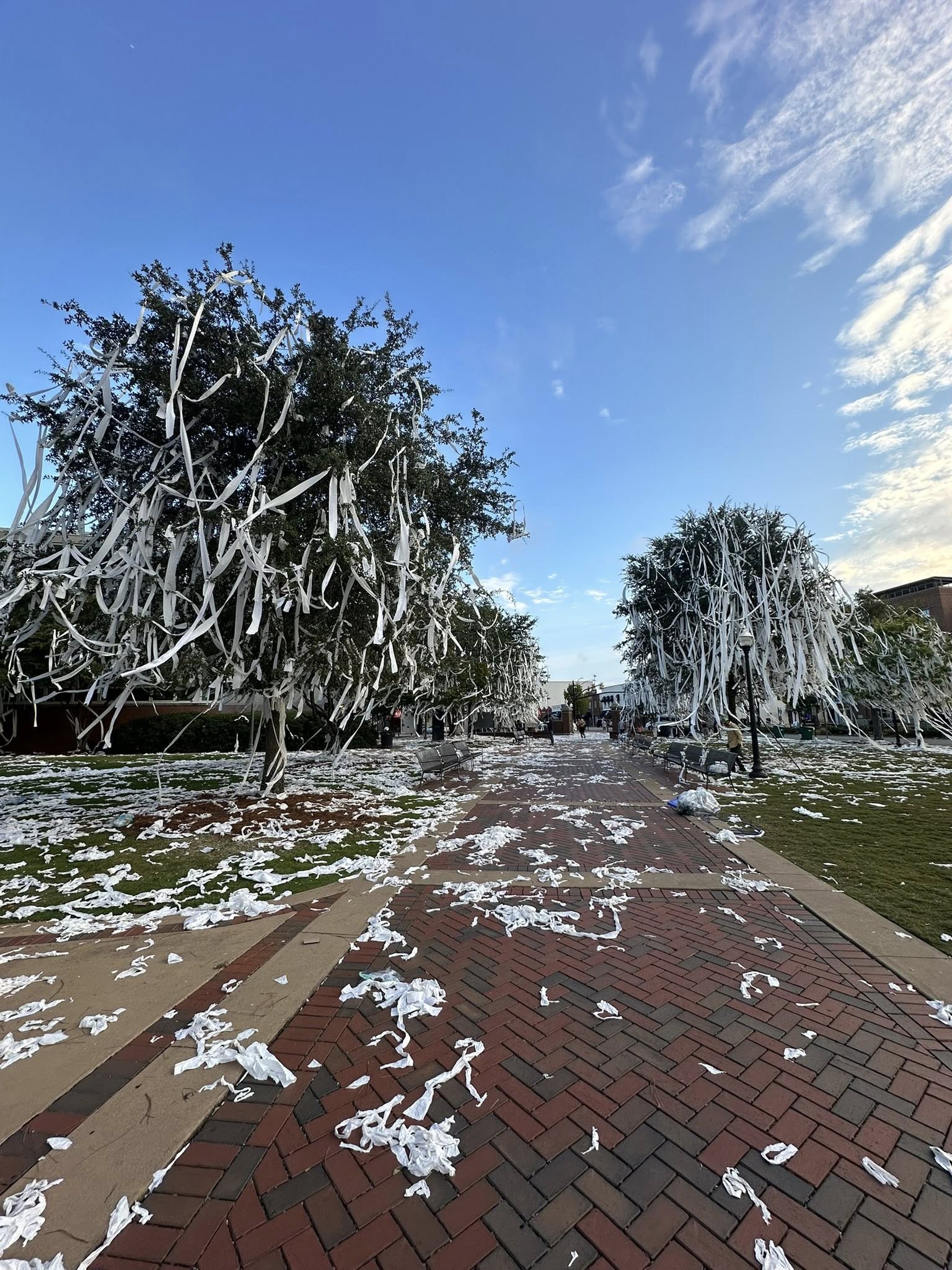
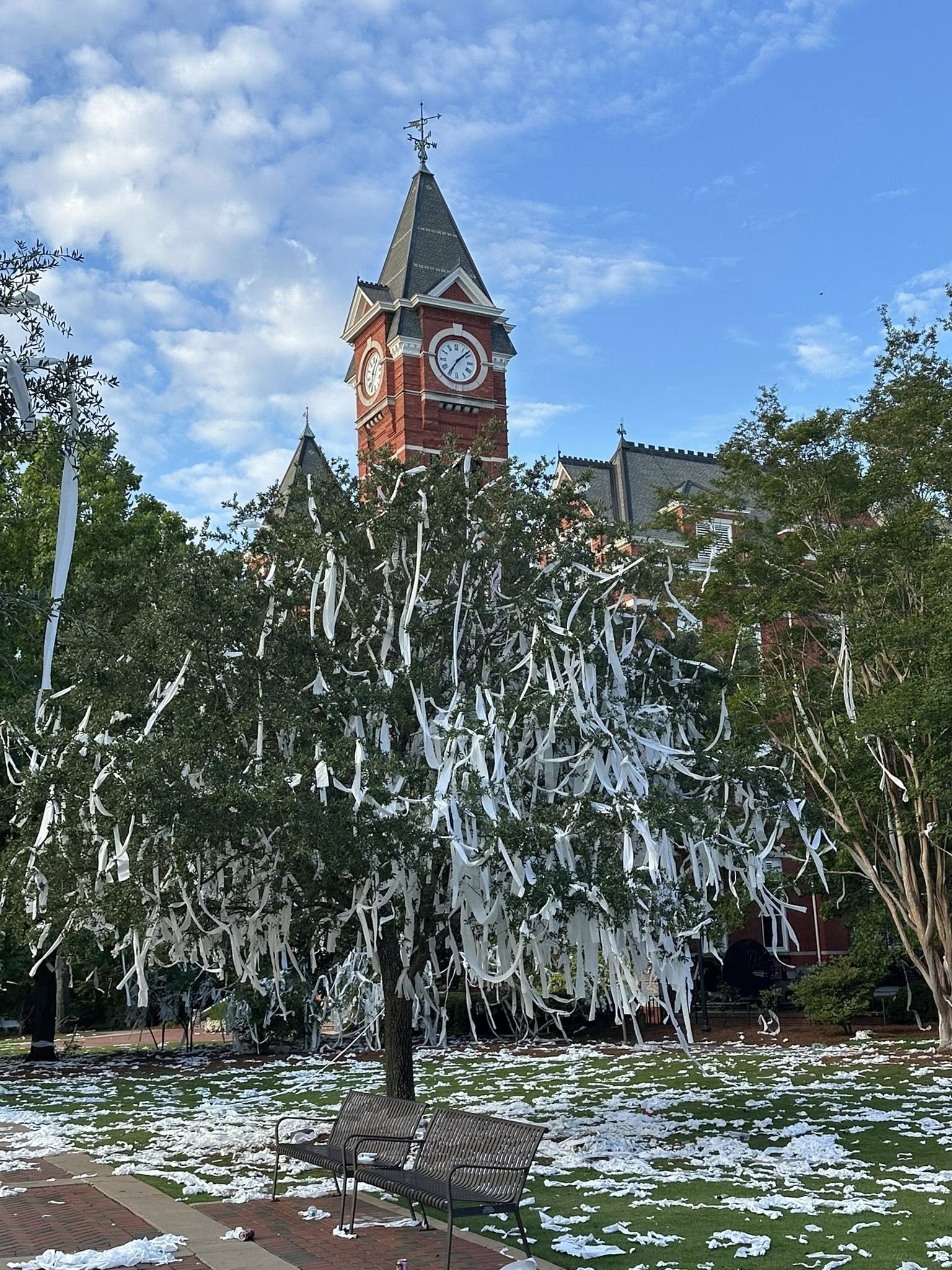
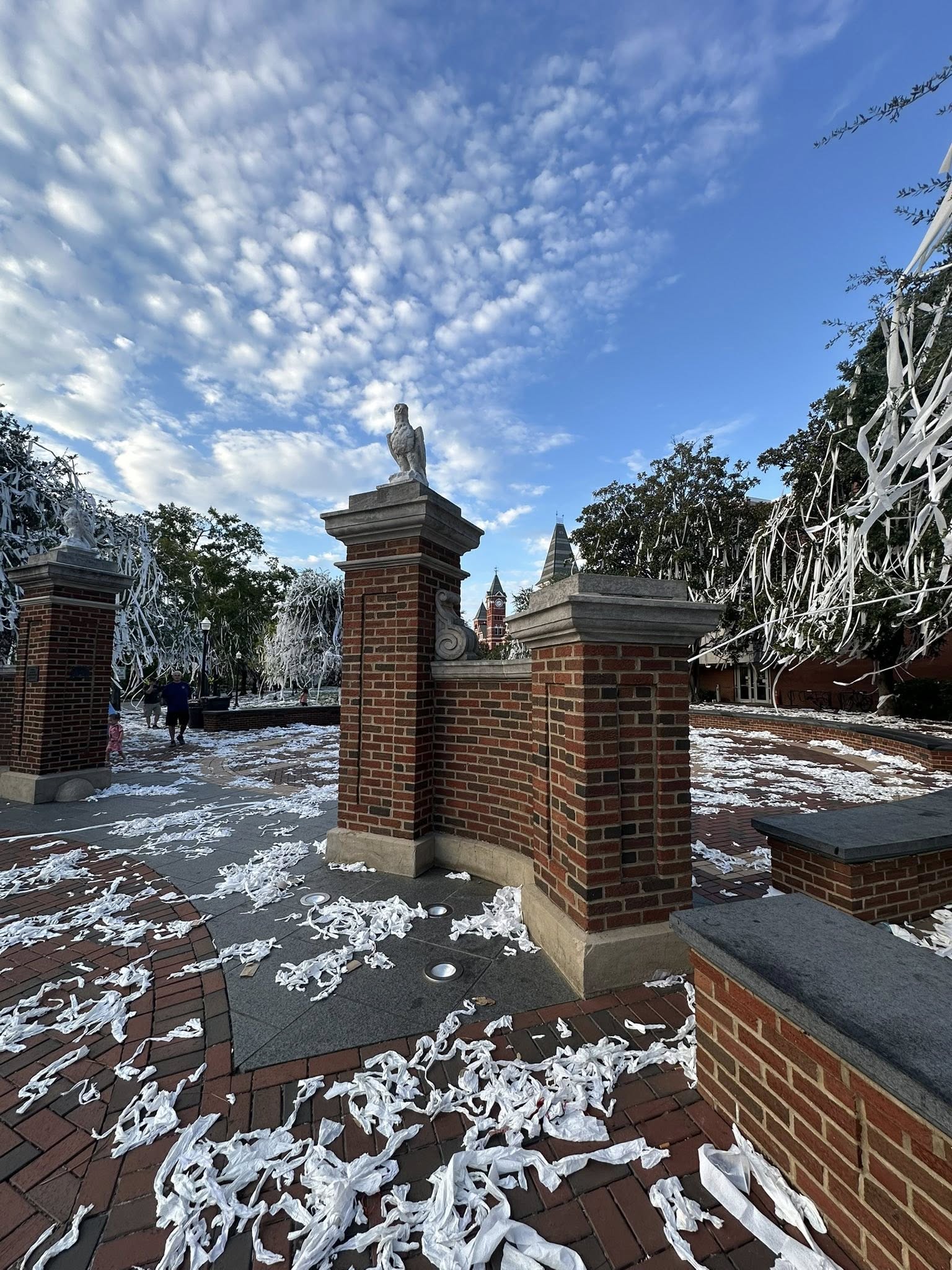
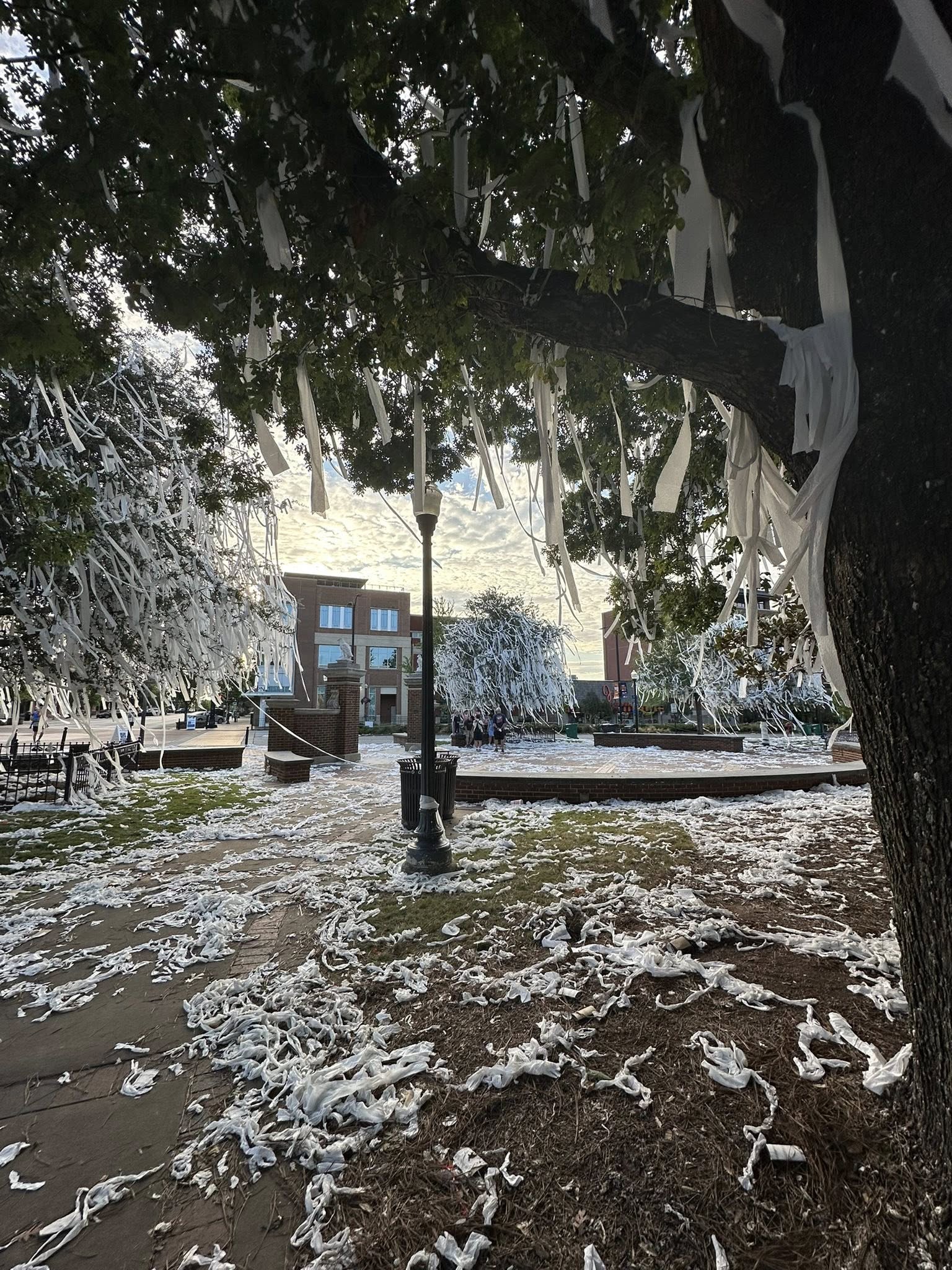
Traditionally, Auburn fans use toilet paper to cover the trees, power lines, and surrounding areas following significant victories.
Fans most often associate rolling Toomer’s Corner with football, but Auburn achievements in other sports can also bring celebrations to the corner.
In June 2026, for example, Auburn celebrated the men’s golf team’s second NCAA championship in three years at Toomer’s Corner.
The tradition is not limited to one team. It represents Auburn celebrating Auburn.
Why the Toomer’s Oaks Story Matters
People sometimes look at rolling Toomer’s Corner and see toilet paper in trees.
Auburn people see something deeper.
They see generations gathering at the same intersection. They remember games, championships, family members, college years, and moments when the entire community celebrated together.
The original oaks could not be saved. The first replacement effort suffered another destructive act. The current trees then needed years of protection and professional care.
Still, the tradition survived.
That history demonstrates how seriously Auburn University protects its traditions.
What People Moving to Auburn Should Understand
If you are moving to Auburn, traditions such as rolling Toomer’s Corner help explain the community’s strong connection to Auburn University.
That connection affects more than football.
University events influence:
- Traffic
- Parking
- Downtown activity
- Business schedules
- Housing demand
- Community celebrations
- The rhythm of different seasons
- How residents identify with Auburn
Auburn University (https://www.auburn.edu/)
Jordan-Hare Stadium (https://auburntigers.com/jordan-hare-stadium)
A listing can show you a home’s square footage and distance from campus. It cannot fully explain what living near Auburn University feels like during football season or after a major victory.
Local experience helps provide that context.
Frequently Asked Questions About Auburn University Traditions
Are the Current Toomer’s Oaks the Original Trees?
No. The original oaks were removed in 2013 after being poisoned in 2010. The current trees were planted in 2017.
When Were the Original Toomer’s Oaks Planted?
Auburn University reports that the original Auburn Oaks were planted between 1937 and 1939.
Were Replacement Trees Planted in 2015?
Yes. Two replacement oaks were planted in 2015. After one was intentionally set on fire in 2016, both trees were eventually removed.
When Were the Current Oaks Planted?
The two current Toomer’s Oaks were planted in February 2017.
When Did Auburn Allow the Current Trees to Be Rolled?
Auburn University announced that rolling the two prominent trees could resume in 2023, after they had recovered from transplant stress and become established.
Is Rolling Toomer’s Corner Only a Football Tradition?
No. Football victories frequently lead to rolling, but Auburn fans also celebrate important accomplishments by other university athletic teams.
Who Takes Care of the Toomer’s Oaks?
Auburn University professionals, including arborists and landscape-services personnel, monitor and maintain the trees.
Where Is Toomer’s Corner?
Toomer’s Corner is located at the intersection of College Street and Magnolia Avenue, where Downtown Auburn meets the Auburn University campus.
Moving to Auburn Means Joining Its Traditions
I have lived in the Auburn–Opelika area since 1988, so I remember the original Toomer’s Oaks and the years of change that followed their loss.
The trees at the corner may have changed, but Auburn’s connection to that location has not.
I have been a REALTOR® for more than 20 years, and I help buyers understand more than houses. I help them understand traffic, neighborhoods, university events, community history, and what everyday life in Auburn may look like.
I am an Auburn University alumna and an Associate Broker with Berkshire Hathaway HomeServices Preferred Real Estate, the Official Real Estate Partner of the Auburn Tigers.
If you are moving to Auburn, I would love to help you find the right home and become part of a community that takes its traditions seriously.
Call or text Laura Sellers at 334-332-7263.
Search Auburn homes for sale at AuburnOpelikaALRealEstate.com.
Homes, y’all!